
Key Takeaways
Heavy-duty commercial gate openers are designed to handle frequent use, heavy gates, and demanding business environments. They provide stronger motors, advanced safety features, access control integration, and backup power compared with residential systems. Businesses can choose between swing and sliding gate motors based on space, gate weight, and traffic volume. A properly specified system can improve security, reduce downtime, and lower long-term maintenance costs. Schmidt Gates provides customised commercial gate automation solutions designed for reliable everyday performance.
A warehouse manager once shared how their gate kept breaking down every few months. Delivery trucks would sit idle at the entrance, costing them hours of lost productivity. Once they switched to heavy-duty commercial gate openers, the breakdowns stopped. The gate just worked – every single day.
For busy sites, a gate is part of everyday operations rather than just a security feature. Staff, visitors, suppliers, and delivery drivers may all depend on it throughout the day. It helps manage access, supports site security, and keeps vehicle movements organised. When a gate becomes unreliable, the disruption can affect far more than just the entrance itself. Getting the right equipment matters more than most people realise – until something goes wrong. For high-traffic properties, heavy-duty commercial gate openers are designed to cope with the demands of frequent daily operation. According to Dataintelo, the global heavy-duty gate openers market is valued at $1.86 billion in 2025 and is projected to expand to $3.41 billion by 2034, representing a compound annual growth rate of 6.8% during the forecast period.
How Heavy-Duty Commercial Gate Openers Differ from Residential Systems
Many purchasing decisions go wrong here. Business owners try to save money by installing a residential unit on a commercial property. It almost always ends in disappointment.
Residential gate openers are built for light, infrequent use – usually around 10 to 15 cycles per day. That’s fine for a family home. But a commercial property might handle 50, 100, or even 200+ vehicle movements daily. A residential motor isn’t built for that.
- Duty cycle: Residential motors need frequent rest periods. Heavy-duty commercial gate openers are rated for 50–100% duty cycles, meaning near-continuous operation without overheating.
- Motor strength: Commercial motors produce far more torque – the force needed to push a heavy gate from a standstill.
- Gate weight capacity: Commercial systems handle gates weighing several hundred kilograms. Residential units can’t come close.
- Integration capability: Commercial openers connect to access control systems, intercoms, CCTV, and vehicle detection loops. Residential units generally don’t support these.
- Build quality: Industrial-grade gearing, better weatherproofing, and heavier internal components mean commercial systems last significantly longer under demanding conditions.
Trying to use a residential opener in a commercial setting is like using a hatchback to tow a heavy boat. The specs look fine on paper until you actually try it.
Key Features of Heavy-Duty Commercial Gate Openers
Knowing what to look for helps businesses avoid expensive mistakes. When comparing heavy-duty commercial gate openers, there are several features that matter most.
Motor Power and Torque
The motor is one of the most important components of heavy-duty commercial gate openers, particularly when the system needs to move a large or frequently used gate. The motor needs enough torque to push a heavy gate from a complete standstill – especially when the track has dirt or debris on it, or when wind is pushing against the gate panel.
- Choose a motor rated for at least 50% more than your gate’s actual weight
- A 400kg gate needs a motor rated for at least 600kg
- This buffer keeps the motor running cooler and extends its working life
- Higher torque also means smoother, more consistent movement
Safety Features
- Obstacle detection: Stops or reverses the gate if something enters its path
- Photoelectric beams: Detect objects or people in the gate’s travel zone
- Safety edges: Pressure-sensitive strips that trigger a stop on contact
- Soft-start and soft-stop: Reduces impact force at the beginning and end of each cycle
This isn’t just about safety. It’s a liability issue. A gate that injures someone because it has no detection system is a legal problem as much as anything else.
Access Control Integration
Access control is often one of the reasons businesses choose heavy-duty commercial gate openers in the first place.
- Connect to keypads, card readers, and fob systems
- Integrate with video intercoms and ANPR cameras
- Link to remote management platforms for off-site monitoring
- Automatically log entry and exit records
- Allow different access levels for different users (staff, contractors, visitors)
A commercial gate opener, when integrated properly, becomes part of a complete security solution rather than just a motorised barrier.
Backup Power
Power outages happen. For heavy-duty commercial gate openers, having a reliable backup power option can prevent an outage from becoming an operational problem or security gap.
- Battery backup keeps the gate operational during outages
- Quality systems can handle dozens of cycles on battery power alone
- Some systems include automatic recharging when grid power returns
- Fail-safe modes can be configured to lock the gate open or closed depending on the site’s needs
Types of Gate Motors: Swing vs Sliding
The gate type determines the motor type. Getting this wrong creates problems no motor upgrade will fix later.
Swing Gate Motors
Swing gates open inward or outward on a hinge, like a large door. Aluminium swing gates are popular where aesthetics matter – corporate offices, prestige properties, and gated communities.
Key things to know about swing gate motors:
- Ram-driven systems use an electromechanical arm to push and pull the gate leaf – reliable and cost-effective
- Underground motors are buried beneath the gate post for a cleaner look – more expensive but visually tidier
- Hydraulic systems offer the most power for very heavy gates and handle high-cycle environments well
- Swing gates need clearance space for the arc of the swing – on tight sites or sloped driveways, this can be a limitation
Sliding Gate Motors
Electric sliding gates move along a track rather than swinging open. They’re the preferred choice for most commercial properties with high vehicle traffic, making them a natural application for heavy-duty commercial gate openers.
Why businesses prefer sliding gates:
- No clearance space needed for swinging – ideal for tight sites
- Generally faster operation than swing gates
- Work well on sloped driveways where swing gates would be awkward
- Better suited to very heavy gates – steel and iron panels that swing gates struggle with
- Electric sliding gate openers for driveways use a rack-and-pinion drive system, which is robust and low-maintenance when correctly matched to the gate
One important note: the gear rack – the toothed rail the motor engages with – must be properly matched to the gate’s weight and length. Getting this wrong is one of the most common causes of early motor failure. Before committing to a system, it’s worth reading a detailed commercial sliding gate installation guide to understand what’s involved.
Benefits of Installing Heavy Duty Commercial Gate Openers
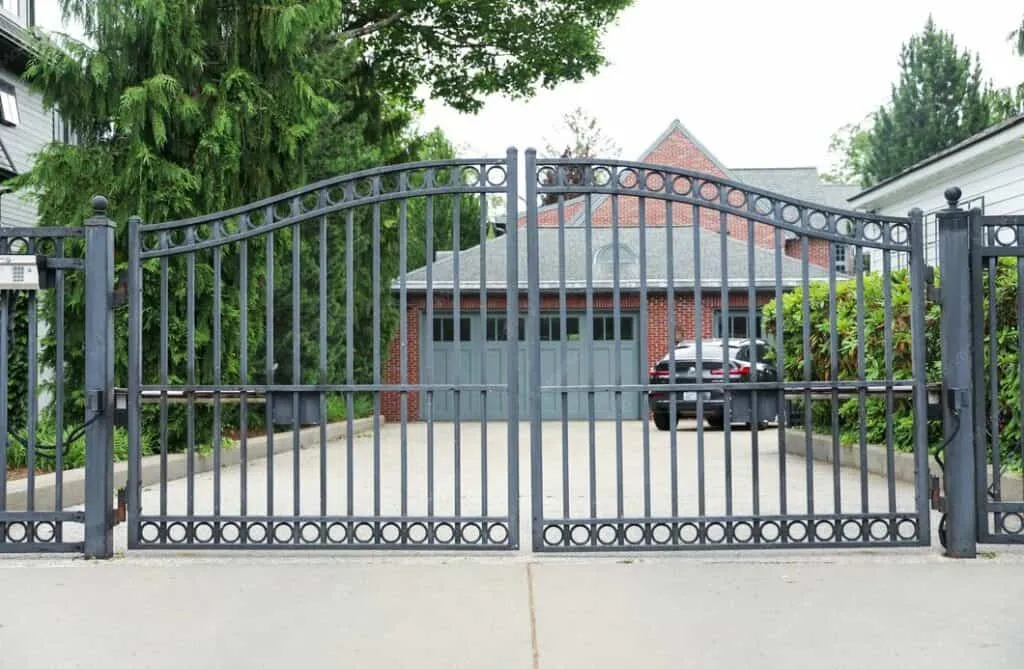
For many businesses, the benefits extend beyond controlling who enters and exits the property.
Better Security Without Extra Staffing
- Automated access control reduces the need for a guard at the entry point
- Staff can manage and monitor gate access remotely
- Every entry and exit is automatically logged with a timestamp
- Unauthorised access attempts are easier to detect and record
Lower Long-Term Costs
Spending more upfront on a properly rated system costs less over time. Here’s why:
- Undersized systems fail more often and need more frequent servicing
- Replacement parts and call-out fees accumulate quickly on an underpowered unit
- A correctly specified heavy-duty commercial gate opener can run reliably for 10–15 years with routine maintenance
- Fewer breakdowns mean less disruption to daily operations
If you’re weighing up the automatic gate cost against these savings, the numbers look very different when you factor in long-term reliability.
Smoother Traffic Flow
- Vehicle detection loops trigger the gate before a car even stops – keeping traffic moving
- Reduces bottlenecks at busy entry points
- Useful for logistics hubs, car parks, and industrial sites with high daily vehicle counts
- Automatic driveway gates can be programmed for specific opening schedules during peak hours
Reduced Liability
- A gate with proper safety detection significantly reduces the risk of vehicle or pedestrian injury
- Reliable fail-safe modes prevent the gate from failing in a dangerous position
- Access logs provide a clear audit trail if an incident does occur
Conclusion: Reliable Gate Automation Solutions
Choosing the right heavy-duty commercial gate openers comes down to understanding your site. Gate weight, daily traffic volume, available space, existing security infrastructure, and budget all play a role in what will actually work for your property.
Every commercial property has different requirements. A warehouse handling frequent deliveries will have different needs from a school, office complex, or residential development. Whether the site uses heavy steel gates for industrial security or aluminium gates for a modern, low-maintenance appearance, matching the system to the property’s daily demands usually leads to better long-term performance.
Working with an experienced local installer who asks the right questions before recommending anything makes this process much easier. The goal is a system that works quietly and reliably every single day, without you ever having to think about it.
FAQs
What is the average lifespan of a commercial gate opener?
With correct specification and regular maintenance, most commercial gate openers last between 10 and 15 years. Undersized motors or poor installation will shorten that considerably.
Can commercial gate openers integrate with access control systems?
Yes. Commercial-grade systems are designed to connect with card readers, keypads, intercoms, ANPR cameras, and remote management platforms. This is one of their main advantages over residential units.
When should a commercial gate opener be upgraded or replaced?
Watch for frequent breakdowns, slow operation, unusual noise, or an inability to handle the gate’s weight consistently. If repair costs are adding up, replacement is usually the smarter investment.
What gate size can a heavy-duty commercial gate opener support?
Most heavy-duty systems handle gates from 500kg up to 2,000kg or more for industrial-grade units. Always check the motor’s rated capacity against your gate’s actual weight before purchasing.
Can a commercial gate opener be added to an existing gate?
In most cases, yes – provided the existing gate is structurally sound and the geometry suits the drive system. A site inspection by a qualified installer will confirm compatibility.
How can businesses improve security with automated gate systems?
Combining a commercial opener with access control, vehicle detection loops, CCTV, and automatic entry logging creates a layered security system that’s both more effective and easier to manage than manual access control. Electric sliding gates for driveways with high traffic volumes are particularly effective in this setup.
Why choose Schmidt Gates for your commercial gate automation?
Schmidt Gates works with businesses throughout the Gold Coast to design and install commercial gate automation systems. Their approach focuses on matching the right equipment to the practical requirements of the site, helping reduce maintenance issues and improve day-to-day reliability.