
📌 Key Takeaways
Custom gates depend on both the right material and skilled fabrication. Aluminium doesn’t tarnish easily, places less strain on hinges and motors due to its light weight, and requires little maintenance. All of these factors contribute to why it’s become the preferred medium for driveway and entry gates on residential and commercial properties. This article will cover what aluminium fabrication entails, why custom gates have a leg up on your average store-bought gate, and why it’s a more durable option for your home than steel or wrought iron.
A gate is typically the first line of defense between a visitor and the inhabitants of a home. A cheap one sags or starts flaking rust within a season or two. A properly built one just sits there working, year after year. The difference comes down to the material and aluminium fabricators who put it together.
Good aluminium fabrication services aren’t just people who own a welder. Experienced aluminium fabricators bring real know-how to every project: how much weight a hinge can take, how the metal handles wind and salt, how a gate holds up after years of opening and closing.
What is Aluminium Fabrication?
Put simply, aluminium fabrication is turning raw aluminium stock into a finished piece by cutting, bending, welding, and putting it all together. Professional aluminium fabricators use these techniques to create strong, accurate finished products. Sounds straightforward. It isn’t, really, because aluminium behaves nothing like steel once you’re trying to shape or join it.
Most manufacturing processes have a design stage, where the products are drawn or measured. The manufacturing process itself typically involves cutting the metal to the required size using a machine or by hand. Items can also be bent to the desired shape. Finally, the components can be assembled together using welding, rivets, or bolts, with the whole product being coated with anodising or powder coating to prevent corrosion.
Aluminium sheet metal fabrication covers the flat-stock side of things: sheets cut and formed into panels or frames; aluminium extrusion services work differently: aluminium gets heated and pushed through a shaped die, which is how you get those long, even bars and rails you see on gates and fences.
A gate usually needs both. Extruded bars give the frame its strength. Sheet work fills in the decorative panels or the solid sections where you want privacy instead of visibility. Knowing when to reach for which one is honestly what separates experienced aluminium fabricators from someone just getting by.
Why the Process Matters More Than People Realise
A lot of people assume any welder can knock out a gate. Technically maybe. But aluminium needs different heat control than steel; it conducts heat fast and warps if you’re not paying attention. A shop that mostly does steelwork might genuinely struggle here, not because they’re bad at their job, just because the material behaves differently. This is why choosing experienced aluminium fabricators can make such a difference.
Benefits of Custom Aluminium Fabrication
“Custom” gets thrown around a lot, but with aluminium it actually changes what the finished gate can do. Skilled aluminium fabricators can tailor every part of the design to suit the property.
Start with fit. Off-the-shelf gates come in a handful of standard sizes, and most driveways don’t match any of them exactly. With custom aluminium fabrication, aluminium driveway gates can be measured and built by experienced aluminium fabricators to your actual opening, down to the millimetre, so you’re not left with a gap on one side or a gate that grinds against the post.
Weight matters too, more than people expect. Aluminium weighs roughly a third of what steel does, yet the right alloy still holds up fine under normal stress. Less weight means less strain on hinges and, if it’s automated, less strain on the motor. Experienced aluminium fabricators can also account for these factors when designing the gate and selecting the hardware. That alone cuts down on the number of repair calls over the years.
Then there’s rust, or the lack of it. Aluminium forms a thin oxide layer on its own that keeps corrosion from spreading. Add a powder coat on top, and you’ve got something that can sit through years of rain and salt air without bleeding orange streaks down your driveway.
Maintenance is where it really pays off. No repainting every few years, no scrubbing rust off the joints. A hose-down now and then keeps most aluminium gates looking close to new, which is more than you can say for timber or steel.
And because it’s custom-built, aluminium fabricators can plan for a keypad, intercom, or camera mount from the start instead of drilling into a finished gate later and weakening the frame.
Why Aluminium Is Ideal for Custom Gates
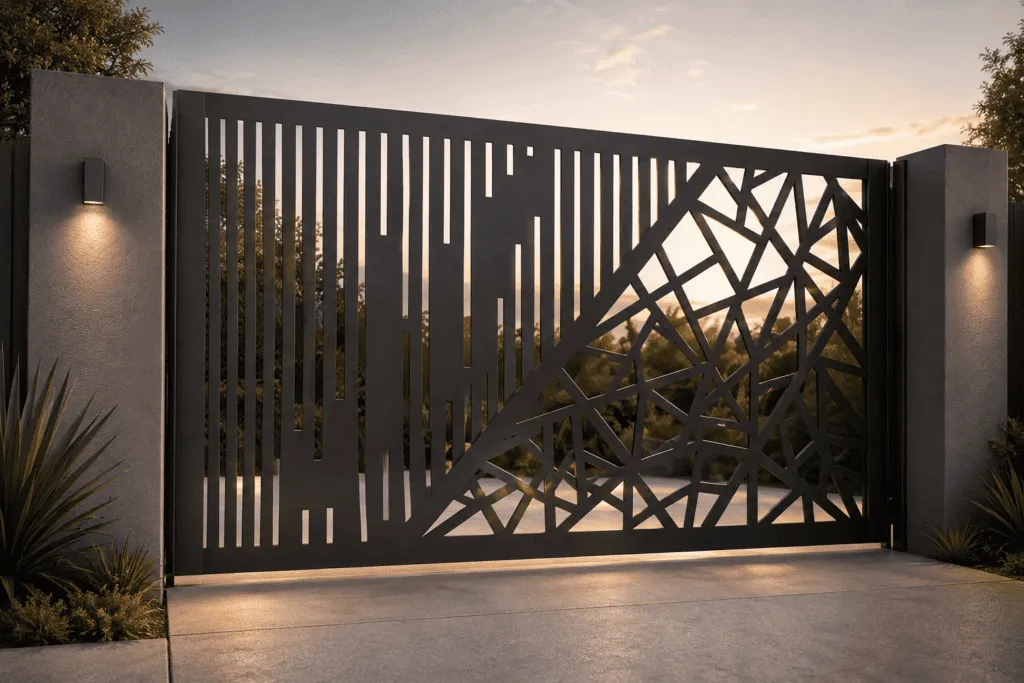
Not every metal suits every job, which is why experienced aluminium fabricators consider the property’s environment, design and intended use before choosing materials. Wrought iron looks great until the paint chips and rust creeps in. Steel holds up, but it’s heavy and doesn’t love salt air. Aluminium tends to land right where most properties actually need it. According to Business Research Insights, the global industrial safety gates market is expected to increase from USD 0.53 billion in 2026 to USD 0.64 billion by 2035, reflecting a compound annual growth rate (CAGR) of 2.3% over the forecast period.
It Handles Weather Without Complaint
Coastal homes deal with salt spray, and that’s most of Australia’s population, really. Places further inland deal with harsh sun and big temperature swings instead. Experienced aluminium fabricators can recommend suitable materials and finishes based on these local conditions. Aluminium shrugs off both reasonably well, which is a big reason property owners near the water ask for it by name. Rust just isn’t the issue it is with iron or steel.
It’s Easier on Hardware
A heavy gate wears down hinges, posts, and openers faster than people realise, usually showing up as sagging or a motor that burns out early. A lighter aluminium frame takes a lot of that strain off, which stretches the life of the whole system, not just the panels. Good aluminium fabricators take these weight considerations into account when designing the frame and selecting hardware.
It Bends to Almost Any Style
Modern, traditional, Federation-style, industrial whatever the house calls for, aluminium can be shaped to fit. Extrusions can be worked into scrollwork that resembles wrought iron or kept clean and flat for a contemporary look. Aluminium fabricators can also incorporate solid panels for privacy and open bars for visibility, while integrating automatic gates for added convenience, security, and easy access.
It’s Genuinely Cost-Effective Over Time
Upfront, it usually costs more than basic chain-link and less than premium wrought iron. But once you factor in barely any maintenance and a lifespan measured in decades, aluminium tends to come out ahead on total cost. No repainting, no rust repairs, no replacing hardware every few years. Reputable aluminium fabricators can help homeowners choose a design that minimises long-term maintenance.
Aluminium isn’t perfect, to be fair. It dents more easily than steel under a hard direct hit, so if a delivery truck is likely to clip it while backing up, that’s worth mentioning to your fabricator before you sign off on a design. A good one will bring this up without being asked.
If you’re searching around for aluminium fabrication Gold Coast options, it’s worth looking past price alone and asking aluminium fabricators to show you actual gate work they’ve built, not just brackets or railings.
Conclusion
Most individuals buy a gate seldom, perhaps twice in a lifetime, so it is not easy to assume how important the material and professional skill can be.
FAQs
What are the common processes involved in aluminium fabrication?
Cutting, bending, welding, machining, and finishing cover most of it. Cutting shapes the raw stock, bending forms the profile, welding or fastening joins the pieces, and finishing, usually powder coating or anodising, protects the final product from corrosion.
How do I choose the right aluminium fabricators for my project?
When comparing aluminium fabricators, check their past work, ask how much of it is specifically aluminium rather than steel, and read reviews from people who had gates or fencing built. It also helps to ask if they’ll do a custom design consultation instead of just handing you a catalogue.
What industries benefit from aluminium fabrication services?
Construction, automotive, marine, agriculture, and residential fencing all lean on aluminium fabrication regularly. Anywhere metal parts sit outdoors or need to stay light, aluminium tends to be the go-to choice.
Can Schmidt Gates create gates for residential and commercial properties?
Yes. A fabricator with experience across both markets can handle anything from a single driveway gate to a full entry system for a business park or gated community.
Why are aluminium gates better than steel gates?
Aluminium doesn’t rust the way steel does, weighs less, and needs far less upkeep. Steel wins on raw impact strength, but for most homes and businesses, aluminium’s durability and low maintenance make it the more practical pick.
Can aluminium fabricators create fully customized gates?
Yes, and that’s really the point of going custom. Exact measurements, decorative patterns, built-in security hardware, and finishes matched to the house – all of it is possible instead of settling for something mass-produced.